
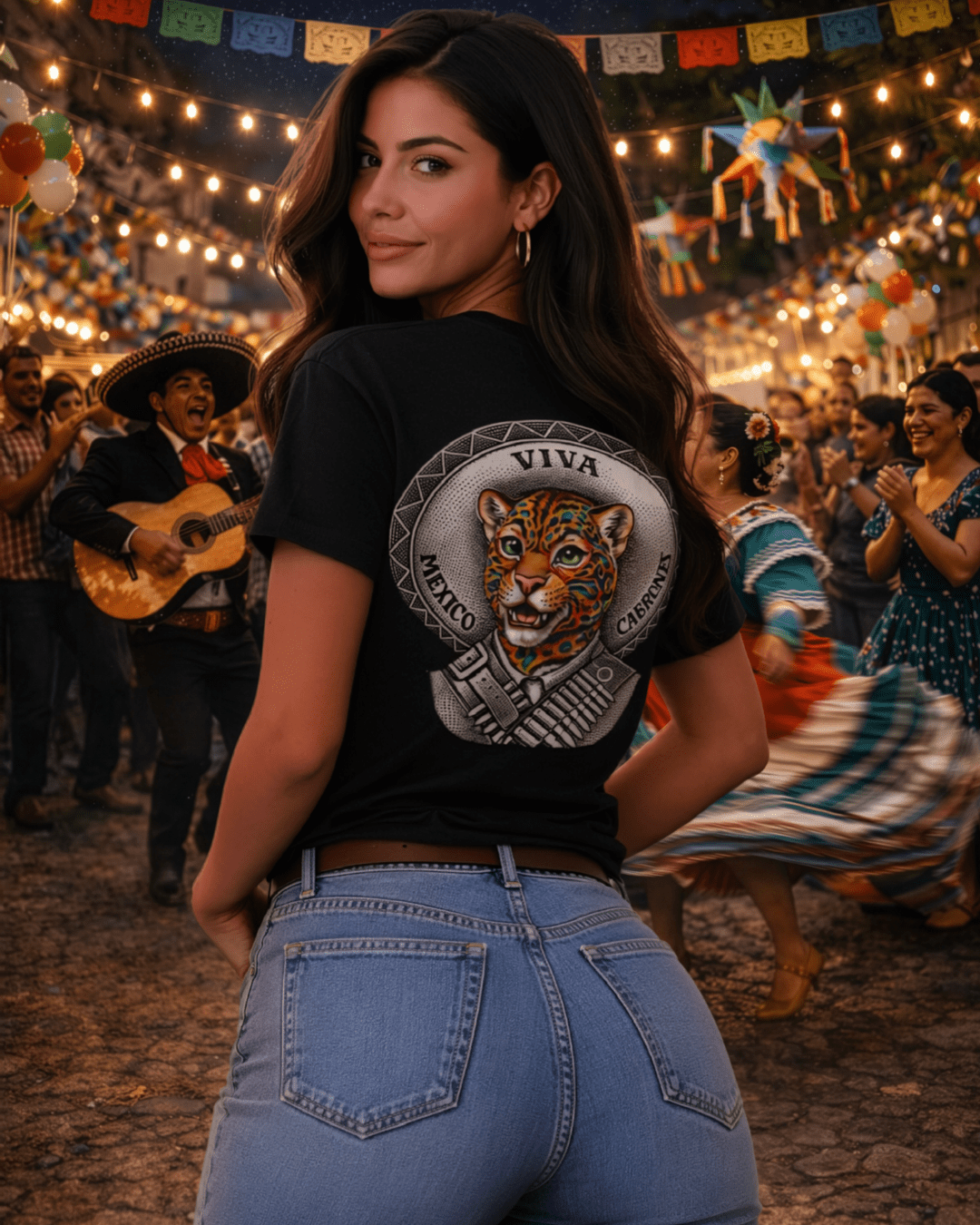
FI-MX-00200 | 'Viva Mexico Cabrones' VMC Sombrero
Some pieces start as graphics. Others start as memory. This one started as a shout.
The VMC Sombrero design draws from the layered visual language of Mexican identity, charro tradition, and the unapologetic spirit embedded in the phrase “¡Viva México, cabrones!”. This is not slang inserted for shock value. The phrase exists within a real cultural lineage tied to Mexican Independence Day and the evolution of patriotic expression. Each year on the night of September 15th, the nation commemorates the beginning of its independence movement through El Grito de Dolores, first associated with Miguel Hidalgo in 1810. While historians debate the exact wording of Hidalgo’s original cry, the modern cultural echo has transformed into a collective affirmation of pride, identity, and continuity.
Over generations, “¡Viva México!” became more than a patriotic declaration. It evolved into a cultural ritual repeated in civic ceremonies, music, murals, and public celebrations. The addition of “cabrones” reflects a uniquely Mexican linguistic nuance. In context, it’s not primarily an insult. It’s emphatic. Familiar. Raw. A word that transforms the phrase from formal patriotism into lived identity. It signals ownership of culture rather than distance from it.
Visually, the design centers on the sombrero charro, one of the most enduring symbols of Mexican heritage. The charro tradition traces back to hacienda culture between the 17th and 19th centuries, where skilled horsemen developed a distinct identity rooted in horsemanship, embroidery, and regional craftsmanship. The sombrero itself began as a functional object, designed with a wide brim to shield riders from intense sunlight. Over time, it evolved into an emblem of prestige and artistry, often decorated with intricate stitching and ornamental detail. By the early 20th century, the charro silhouette had become inseparable from national identity, later influencing mariachi attire and solidifying its place in Mexico’s global cultural image.
At the center of the graphic sits the jaguar, reinterpreted through Jaguar Sol’s mythology but grounded in real Mesoamerican symbolism. In civilizations such as the Aztec and Maya, the jaguar represented power, night, and spiritual authority. Jaguar warriors held elite status in Aztec society, embodying fearlessness and a connection to the divine and the underworld. Incorporating the jaguar into a charro medallion intentionally bridges pre-Columbian symbolism with post-colonial identity. It reflects the layered reality of Mexican culture itself, where indigenous cosmology and colonial-era traditions coexist rather than cancel each other out.
The circular medallion composition references traditional Mexican commemorative graphics and handcrafted civic emblems. Circular seals have long appeared in folk art, patriotic insignias, and artisan prints, often symbolizing unity and permanence. By adopting this structure, the design channels a visual language that feels ceremonial without becoming institutional. It mirrors how Mexican cultural symbols often move fluidly between official heritage and street-level expression.
At its core, the piece is about continuity. The way symbols survive by adapting. The way language shifts but meaning holds. The way cultural pride can be loud without losing depth. Jaguar Sol approaches heritage as something lived rather than archived. Not frozen in historical isolation, but carried forward through reinterpretation.
The VMC Sombrero stands as a cultural intersection. A meeting point between ancestral symbolism and modern expression. Between indigenous memory and evolving identity. Between reverence and defiance.
Not a costume. Not a caricature. A signal.
Comments