

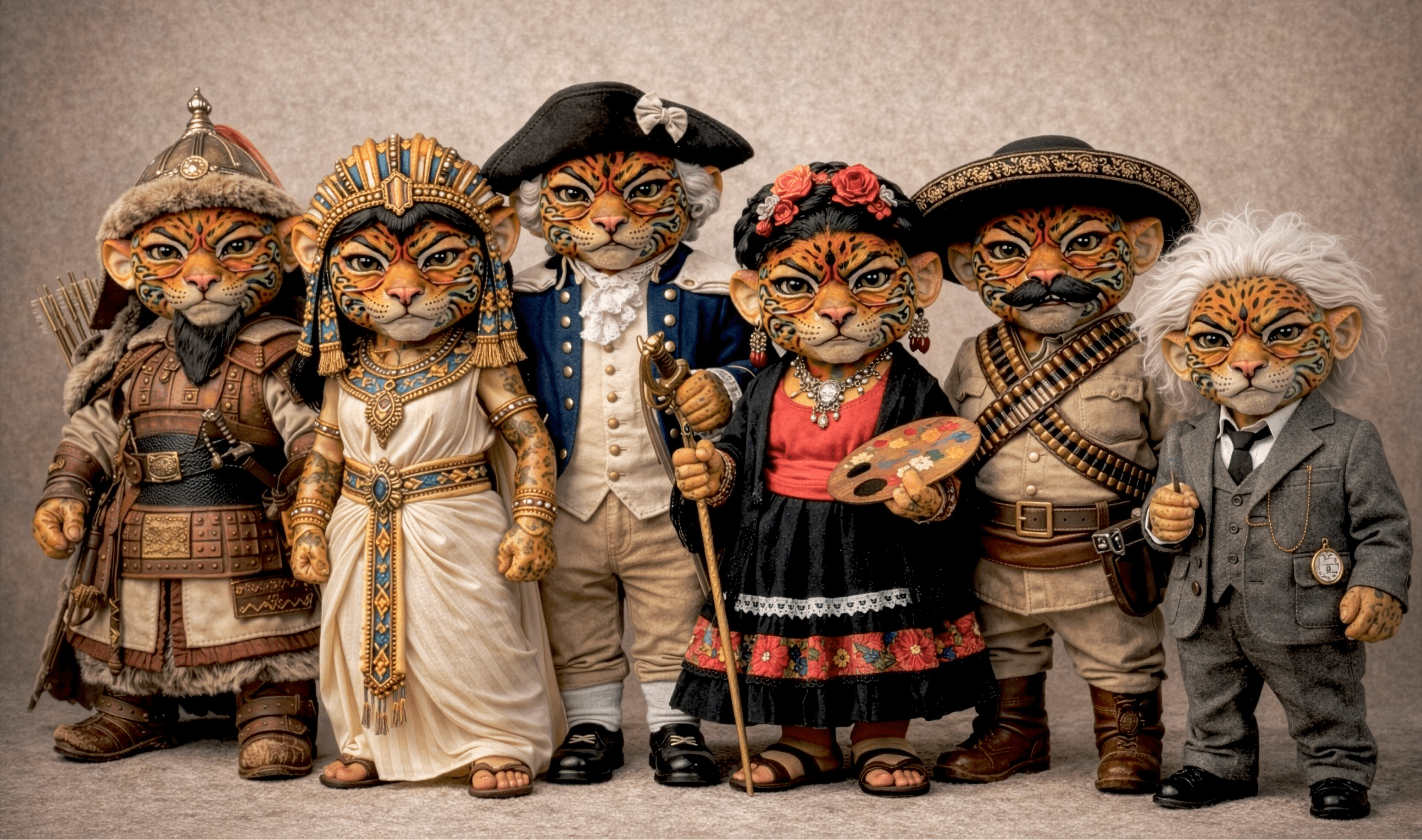

FI-SP-00100 | 'Olé Torito!' Matador Jaguar
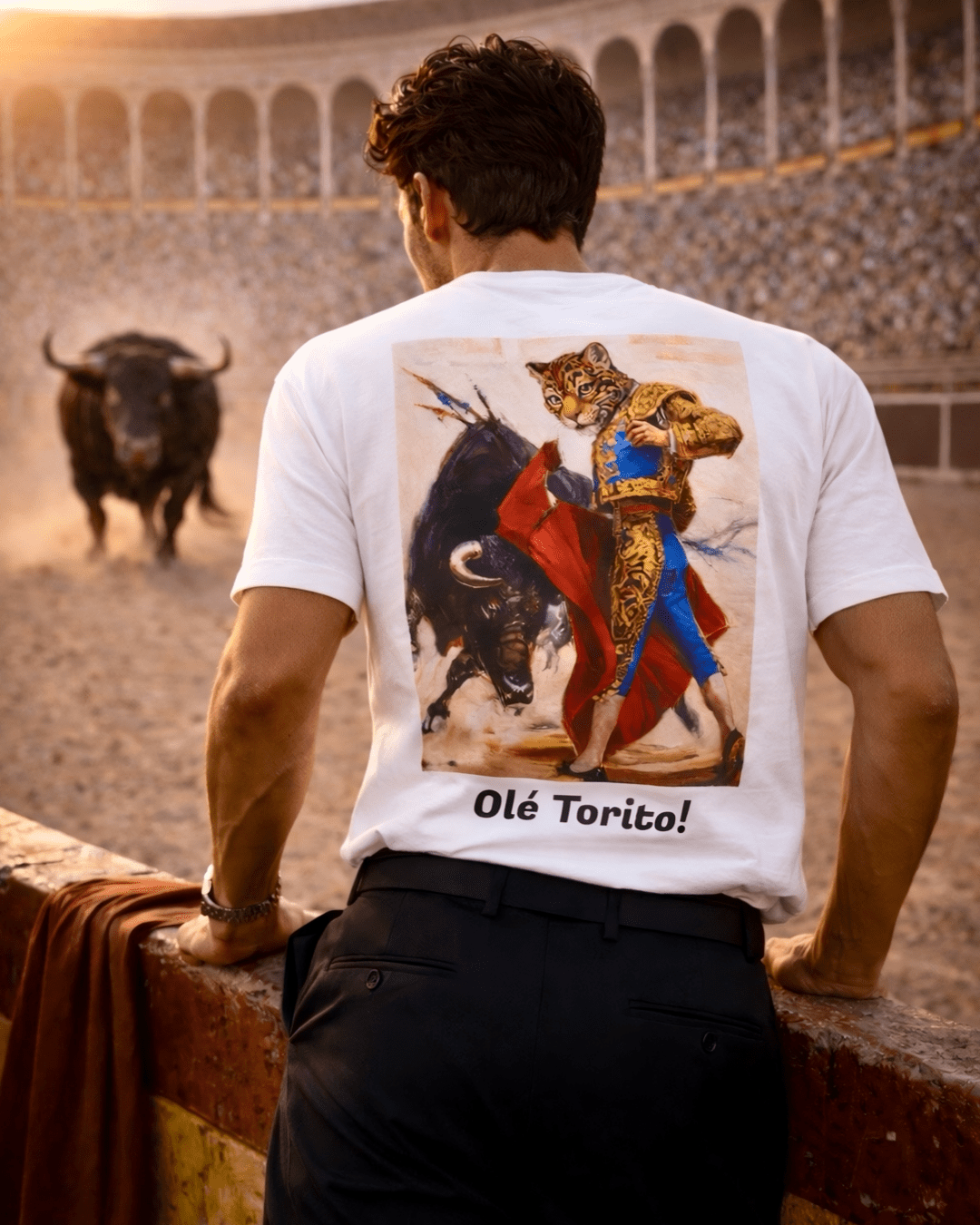
Some designs begin with a sketch. Others begin with a story older than the nations that carry it. The “Olé Torito!” Matador Jaguar belongs to the latter. This piece draws from one of the most visually iconic and historically layered traditions in the Hispanic world: the art and ritual of the bullfight.
At first glance, the graphic is striking. A jaguar-faced matador stands poised in mid-movement, cape sweeping in a flash of red and gold. Behind him, the bull charges forward, frozen in the tension between danger and choreography. Beneath it all, the phrase: Olé Torito! A cry that carries centuries of meaning in a single breath.
But this design is not about spectacle alone. It is about lineage.
⸻
The Cultural Roots of the Matador
Bullfighting, or corrida de toros, has deep historical roots in the Iberian Peninsula, particularly Spain. Its modern form began to take shape in the 18th century, evolving from earlier aristocratic horseback contests into a codified performance carried out on foot. What emerged was not simply sport, but ritual theater.
The matador became a symbol of controlled courage. Dressed in the ornate traje de luces (“suit of lights”), embroidered with gold thread and reflective sequins, the figure embodied a paradox: grace under mortal risk. Every movement was choreographed. Every pass of the cape carried intention. Even the arena itself, the circular plaza de toros, symbolized a stage where tradition, honor, and spectacle converged.
By the 19th century, bullfighting had become a defining cultural emblem across Spain and later spread throughout parts of Latin America, particularly Mexico. There, it intertwined with local identity, festivals, and regional aesthetics, evolving into something both inherited and transformed.
The cry of “Olé!”—now inseparable from the corrida—likely derives from the Arabic “Allah,” reflecting the deep Moorish influence that shaped Spanish culture during centuries of Islamic presence on the peninsula. Over time, the exclamation became a universal expression of admiration for artistry under pressure.
⸻
From Matador to Myth
Jaguar Sol does not replicate history. It refracts it.
The transformation of the matador into a jaguar is intentional, but symbolic rather than cultural. The jaguar appears here as a character within the Jaguar Sol universe, stepping into the role of the matador much like a stage figure inhabits a historic performance.
This shift turns the scene from documentation into mythology. The matador becomes an archetype rather than a specific person. A figure representing composure, tension, and spectacle inside the timeless theater of the arena.
This approach reflects a core Jaguar Sol idea: history interpreted through character-driven storytelling.
⸻
The Language of the Arena
The phrase “Olé Torito!” adds a subtle shift in tone. Traditionally, “torito” is a diminutive form of toro (bull), often used playfully or affectionately in Spanish. In festivals across Spain and Latin America, the word appears in folk songs, fireworks structures (toritos pirotécnicos), and street celebrations.
Here, the phrase reframes the confrontation. It softens the edge of violence and highlights the theatricality embedded in the tradition. Not mockery. Not glorification. Recognition of the cultural language surrounding the ritual.
The bull, too, is central. Historically, the fighting bull (toro bravo) was bred specifically for temperament, strength, and unpredictability. For centuries, these animals symbolized raw nature within a controlled human space. The corrida, at its core, was a confrontation between instinct and intellect, force and finesse.
That tension lives inside this design.
⸻
Visual Composition and Intent
The artwork draws inspiration from classical European oil painting traditions, particularly 18th and 19th century romantic realism, where motion, fabric, and gesture were captured mid-drama. The sweeping cape echoes the traditional muleta, the red cloth used in the final act of a bullfight. The color is not meant to provoke the bull—despite popular belief, bulls are colorblind—but to heighten visual drama for the audience.
Gold detailing reflects the historical opulence of matador attire. Blue tones introduce contrast, grounding the composition in a more contemporary palette while preserving the ceremonial aura.
The jaguar face anchors the design within the Jaguar Sol universe. It reminds the viewer that this is not historical reproduction, but a stylized retelling through character and modern streetwear language.
⸻
A Dialogue Across Cultures
Like many traditions with deep roots, bullfighting today exists within complex conversations. It is celebrated as heritage by some and debated by others. Jaguar Sol does not attempt to resolve that tension. Instead, it acknowledges it as part of the story.
Cultural history is rarely clean. It is layered, emotional, and often contradictory.
By placing the Jaguar Sol character in the role of the matador, the design steps outside literal reenactment and into symbolic storytelling. It invites reflection on how historic imagery can be preserved while still being reinterpreted through contemporary identity.
This is not about reenacting the past. It is about understanding its gravity.
⸻
The Jaguar Sol Vision
“Olé Torito!” exists within a broader Jaguar Sol philosophy:
Ancient patterns. Global roots. Timeless appeal.
The brand’s mission has always been to create a shared space where traditions meet and reinterpret each other through design. Each piece acts as a cultural bridge, not a costume. A conversation, not a replica.
Here, Iberian ritual meets character-driven storytelling. Arena theater meets mythic archetype. Streetwear meets historical memory.
The result is a garment that carries more than an image. It carries a story.
⸻
Closing Reflection
In the arena, everything happens in a circle. The matador enters, the bull charges, the crowd holds its breath. Time compresses into seconds that feel ancient.
This piece captures that suspended moment.
Not as documentation.
As myth.
“Olé Torito!” stands as a visual echo of a tradition that has traveled centuries, crossing oceans and cultures, reshaped by each generation that encounters it. Through the Jaguar Sol lens, the story continues—not preserved in glass, but worn, lived, and reimagined in motion.

Comments