
FI-US-00200 | 'Turned Wild Into West' Charles Goodnight
History rarely changes in a single moment. It shifts slowly, carried by people who build systems where none existed before. The American frontier was not always the structured legend it later became. Before the trails, ranches, and cattle towns, much of the West was vast, unregulated terrain defined more by survival than identity.
“Turned Wild Into West” draws from that transformation.
At the center of this piece is a real figure whose influence helped shape the foundation of the cattle frontier: Charles Goodnight. The design captures that turning point in American history, when raw landscapes began forming the economic and cultural structures that would define the Western era.
The Historical Foundation: Charles Goodnight
Charles Goodnight (1836–1929) was one of the most influential cattlemen of the American West. Born in Illinois and raised in Texas, he came of age during a period when the frontier was still largely unstructured. In the aftermath of the Civil War, Texas was filled with wild longhorn cattle but lacked organized systems to transport or sell them profitably.
Goodnight helped change that.
In 1866, alongside Oliver Loving, he established what became known as the Goodnight–Loving Trail, one of the earliest and most important cattle-driving routes in American history. The trail carried Texas longhorns toward markets in New Mexico and eventually Colorado and Wyoming, helping create the blueprint for the cattle drive era that would define Western identity.
This wasn’t mythology. It was infrastructure.
Where there had been scattered herds and open range, organized routes began forming. Where survival once depended on isolation, economies began to grow around movement, trade, and settlement.
Innovation That Shaped the Frontier
Goodnight wasn’t just a trail driver. He was an innovator.
He is widely credited with inventing the chuckwagon, a mobile kitchen that became essential to long cattle drives. That single invention reshaped the daily structure of frontier labor, turning chaotic expeditions into organized operations with routines, roles, and shared culture.
He also played a key role in early ranching systems, helping transition the West from purely nomadic cattle drives into more stable ranch-based economies. Later in life, Goodnight participated in early efforts to preserve the American bison, maintaining one of the first private buffalo herds at a time when the species was nearing extinction.
These are not small footnotes. They represent the shift from raw expansion to intentional stewardship.
From Untamed Range to Western Identity
The phrase “Turned Wild Into West” captures a broader cultural truth.
The American West was not always the structured iconography we recognize today.
Before the trails, before the ranches, before the towns and rail connections, much of the region existed as open, unregulated terrain. The late 1800s introduced systems: mapped routes, supply chains, ranch economies, and shared codes of survival that would later define Western identity in both reality and folklore.
Figures like Goodnight helped build that bridge between wilderness and structure.
Not through legend alone, but through logistics, endurance, and long-term vision.
The Design Language
The graphic reflects this historical tension.
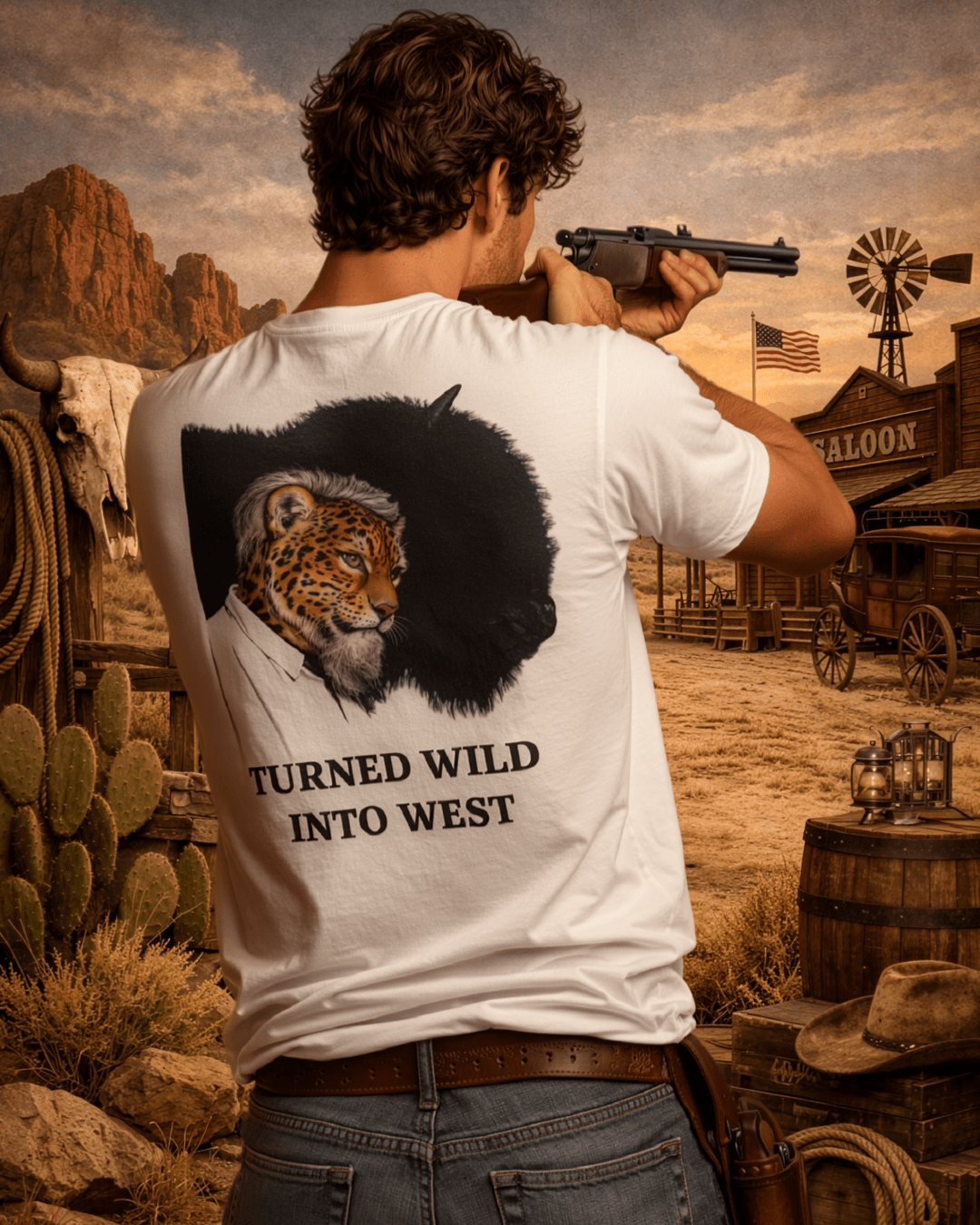
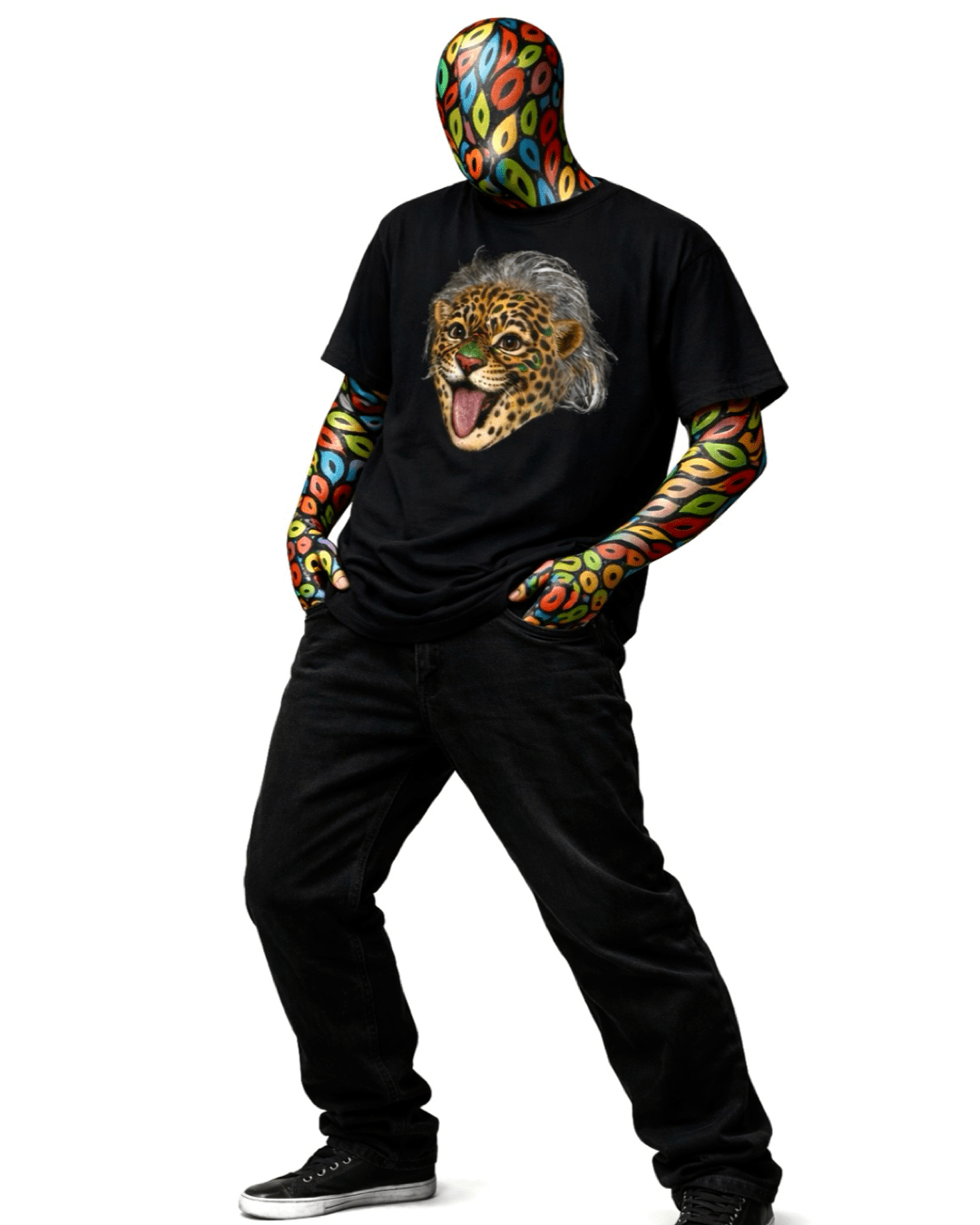
The jaguar portrait is intentionally rendered in a frontier-inspired style, evoking old Western illustration techniques rather than modern hyper-polish. The rough, ink-like background brush gives the image a sense of emergence, as if the figure is being carved out of something untamed.
It mirrors the historical narrative: order forming from raw terrain.
The typography remains grounded and declarative. No ornament. No excess. Just the phrase, centered and direct, like a stamped mark from another era.
This restraint is intentional. Western history is often romanticized. The design avoids that by staying stark and symbolic rather than theatrical.
Cultural Weight Without Mythmaking
Western imagery is frequently filtered through cinema, folklore, and nostalgia. But behind the myth was a period defined by real labor, environmental extremes, and foundational economic change.
Charles Goodnight represents that reality more than the caricature of a gunslinger or outlaw. He was a builder. A systems thinker before the term existed. Someone whose work shaped how the West functioned long before it became an aesthetic.
That’s the cultural gravity behind this piece.
Not spectacle. Transformation.
A Visual Marker of Transition
This archive entry exists to document more than a shirt.
It captures a historical turning point translated into visual.
“Turned Wild Into West” marks the moment when landscapes stopped being purely unknown and began forming identities that would shape economies, regions, and cultural memory.
It reflects a time when trails became lifelines, survival became structure, and individuals like Charles Goodnight quietly altered the trajectory of the frontier.
Not by myth. By momentum.
And that shift is what this piece preserves.
Comments